

Episode Preview
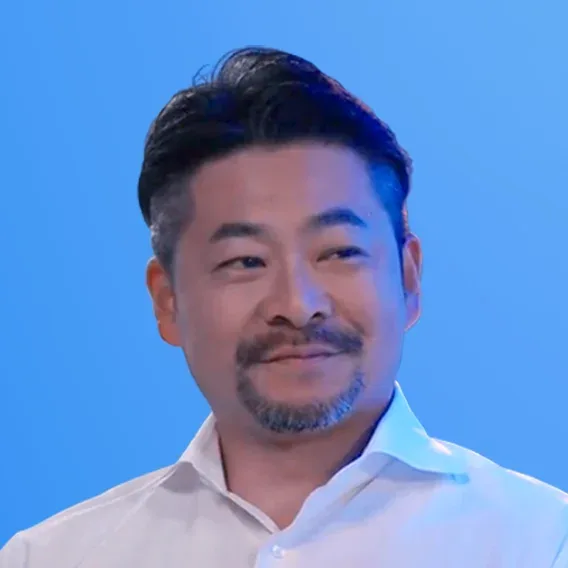
Yohei Mozumi (00:00):
We definitely need to use CDR for achieving net zero 2050. So that's the reason why we clearly state in the strategy: we reduce our emissions by ourselves as much as possible, but remainings we will neutralize by the CDRs. That's the removal part.
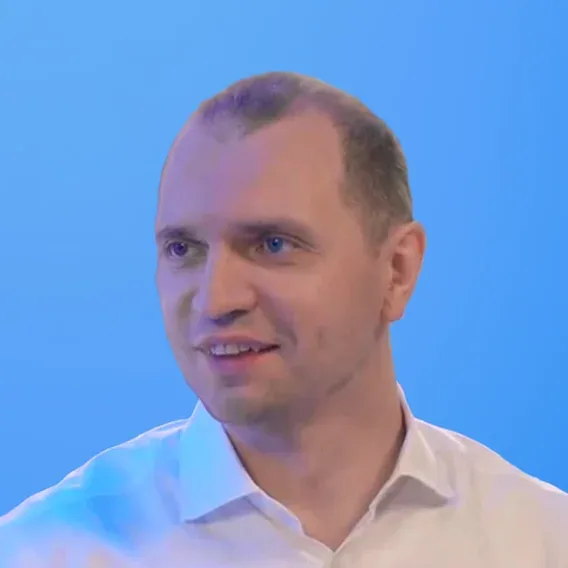
Eugene Zamastyanin (00:21):
A critical point there, you said it's 2050 net zero, but yet you're buying now.
Introduction
Eugene Zamastyanin (00:39):
Hello and welcome to Speaking in Tonnes. I'm your host, Eugene Zamastyanin. Today I'm joined by Captain Yohei Mozumi from NYK. He is a Manager of Decarbonization Group. Yohei-san, welcome to the show. We'll start probably with a very quick question to begin with. You are the captain. You spent some time at sea. Now you actually are on shore tackling probably the biggest challenge that the industry is facing right now. So maybe talk a little bit about how your time at sea shaped the way you see problems on shore.
Yohei Mozumi (01:11):
I started my career in 2010. 10 years I was on the sea. Mainly I was carrying fossil fuel like LNG or crude oil. Since 2021 I started working on shore. I started my career in the ESG promotion group. E is especially important. So they spin out to decarbonization group. And then I also shifted to decarbonization group. Then I'm more concentrated on what is decarbonization. Then I started to realize, you know, seafarers, the crew on the ship, is the one that is really important to understand decarbonization. Because they are the ones that actually control the vessel on the local. So without their understanding, we never reach our expected decarbonization.
NYK’s Decarbonization Strategy
Eugene Zamastyanin (02:01):
Kind of shifting gears a little bit to the strategy, NYK strategy, which I still to this day I admire the decarbonization story. You call it ‘our’ decarbonization story obviously, NYK's decarbonization story. That came out fall of ‘23. Then you had the update the year following. Then you had your position paper on CDRs that came out January this year.
Eugene Zamastyanin (02:29):
So that was great, all of that. But the strategy that you really work towards has three magic words, right? It's reduce, improve, and remove. So can you just talk through three of those?
Yohei Mozumi (02:44):
Yeah, as you mentioned, we disclosed the NYK decarbonization story in 2023. Then our tactic to reduce our GHG emissions is two tactics. First is the maximizing energy efficiency, and second is the using alternative fuels. So first, maximizing energy efficiency. Then I will say probably after 2030 or 2035, we are actually now developing the ammonia fuel vessel, alternative fuel vessel. Then we will build the ammonia fuel, ammonia carrier next year. So we will have ammonia vessel, but we roughly operate 900 vessels. Then we cannot change the vessels in one time, it takes time. We roughly estimate about 10% of our emissions will remain as residual emissions. So how we can abate this residual emission is now it's only way is CDR. So remove, we definitely need to use CDR for achieving net zero 2050. So that's the reason why we clearly state in our strategy. We reduce our emission by ourselves as much as possible, but remainings we will neutralize by the CDRs. That's the removal part.
Eugene Zamastyanin (04:12):
And I guess a critical point there, you said it's 2050 net zero, but yet you're buying now. Can you elaborate on that a little bit?
Yohei Mozumi (04:23):
Yeah, I mean, once we identify this strategy, then we need removals. Why just we need to wait? Once we identify removals is essential to achieve our net zero goal, we just start to explore in the CDR space with what kind of technology is there, what kind of people, what kind of partner could find out. So still, I will say, yeah, still have 25 years, but suddenly we say 2050, I need some, you know, one or two million tonnes of credit. We need to make the relationship gradually from now on. Then we could have a good position in the 2040 or 2050. So that's the reason why we are doing. It’s only way to neutralize residual emissions is CDRs.
Eugene Zamastyanin (05:19):
Definitely would be good to see more companies thinking about the same way.
Yohei Mozumi (05:25):
If everybody starts to realize, need to be net zero in 2040 or 2050 or around 2050, all the shipping companies will definitely will have residual emissions. They cannot, none of the companies will be at net zero by just changing the alternative fuels or do some way other than the CDR.
Book & Claim
Eugene Zamastyanin (05:47):
I guess a very important element is that, you know, you're a commercial shipping company, you can do a lot, but the decarbonization can be carried out by the single party, right? You have your better cargo owners. So as far as I understand, there is a book and claim mechanism. And so can you talk a little bit more about why that was set up? What benefit it brings to the cargo owners and how do you see that progressing at this point?
Yohei Mozumi (06:19):
This, you know, this mechanism, the book and claim, will help our customers' scope three emission reductions. So what is happening is, you know, we're going to use the low carbon fuel. Then we, you know, abate or minimize some GHG emission compared with conventional fuel, right? So the difference is we will create environmental attributes. We'll use the external system plus external verifier. We appointed class N.K. to verify our, this environmental attribute is really correct or true. If some customers really want to reduce their scope through emissions, we can allocate the environmental attribute to them, like mass balance mechanism we use. Then if the customers want, we can provide the zero emission transport service as like a mass balance mechanism. So actually it's not so many companies at this moment, but I see some companies, if they are thinking about considering about the carbon footprint, they're really active. And I was really feel like once they change the idea to carbon footprint from like scope one through three, all the emissions related to the final product is, you know, accumulated in the carbon, the product’s carbon footprint, right? So they are starting caring about, you know, okay, the transportation part, we need to make it zero. So like these companies is, we can, not easy, but we can talk to them and they could understand that they purchase our environmental attribute. So if there's more companies or more like manufacturers, they can focus on the carbon footprint. And I think our service is more like a popular. Then if the environmental attribute we can allocate or we can sell to the customer, we can get some income, then we can purchase more biofuel or alternative fuel or more like CDR.
Eugene Zamastyanin (08:39):
Grow that offering. Fair enough. And I think like in our line of business, obviously, we're seeing that growing number of companies who are starting to look at the product carbon footprint specifically, like more and more companies are starting to look at that entire value chain and looking where these emissions accrue in that value chain and go after each one of them in the same fashion, actually. Yeah, I do. You're mending that service, not thinking about it.
Yohei Mozumi (09:01):
Yeah, I do hope so.
Eugene Zamastyanin (09:02):
Demanding that service, not thinking about it.
Yohei Mozumi (09:05):
When they require that, we can provide a service. So we are pretty much ready for that. So now we are waiting the companies or customers come to approach to us.
Advice for Other Companies
Eugene Zamastyanin (09:16):
When you talk to your colleagues in shipping companies, when they learn what you do and they kind of want to kind of understand what they can do in this space as well. What advice do you give to these people? What do you tell them to focus on? What to think about? You've been on this journey for several years now.
Yohei Mozumi (09:35):
I can say if the shipping company will explore in the CDR space, what they should or should or what they can see more is quality and scalability. These two keys are essential for neutralizing our residual emissions. I believe why the shipping companies start to explore in CDR is the reason is they also want to be net zero. That's the reason why they start watching. So, regarding the quality, this is not the reduction way. It's a removable way. So, if our fuel is coming from underground, the CO₂ captured from the air should be also in the underground, put it in underground. So, I would more like to say the permanence is the one key, how they need to choose the CDR. That's the first. Then next is scalability. As I mentioned, I will probably require one to two million tons—
Eugene Zamastyanin (10:43):
Just NYK. per year.
Yohei Mozumi (10:45):
Per year, true. Even the technology is very advanced, very well, but they don't have any scalability. We cannot get the credit. Scalability is also an important factor. The amount we will purchase is going to be massive. So I think these two points, if the other shipping company can keep the mind, then I think they can have good partners, I guess.
The IMO’s Role
Eugene Zamastyanin (11:15):
It's really hard to imagine how the all the vessels that are being put on the water right now, which will be running in 25 years and a lot of them are dual fuel capable, but a lot of them are still non-dual fuel capable. And so there will be either stranded assets or they will be running on fossil such as bio, essentially carbon intensive fuels. Is there anything else that can be done for the IMO to recognize what this challenge really is and how they should be really going about it?
Yohei Mozumi (11:45):
As you mentioned, 2023 IMO's net zero framework was approved. We need the regulation to justify, to change the fuel to the alternative or low carbon fuel. But the thing is, it will not be zero. There is no zero-carbon fuel exists here now at this moment. We will not it be there. So definitely we, shipping, international shipping, will have a residual emission. So what this regulatory body or IMO needs to think about for the future is the scheme, how we can abate this residual emission. And then the important thing is, this is not the reduction method. This is a removal method. So we need to apply this to high, I will say high durable, such as DACs or BECCs. Something like actually capture the CO₂ and then put it in underground. That's the, I think, appropriate CDR for international shipping. Someone needs to make the momentum. So this is what we are exactly doing.
Eugene Zamastyanin (13:02):
As far as I know, regulators don't like to do something in vacuum. They want to see something working already.
Yohei Mozumi (13:08):
Yeah, exactly. They need something working. So that's the reason why we, not only NYK, but we started purchasing CDR from you guys or others. Then we show the world we are start to moving the direction. So I hope some other companies, shipping companies also come with us, then make the big momentum.
Cool Takes
Eugene Zamastyanin (13:32):
Changing a little bit, even the format, so right, we have this section called Cool Takes. So we have rummaged through your reports. We figured out a catchy quote, catchy piece. And we just want you to dive deep on that one and comment. So specifically, the CDR position paper. 2025, January. The team wrote, "CDR is a necessary element to achieve net zero CO₂ and GHG emissions, both globally and nationally." What convinced you to go that way?
Yohei Mozumi (14:14):
Now we don't have any regulation or like a guidance. Only GHG protocol is exist. But they didn't mention we can use the CDR for our scope one emission. Eventually, we need to use the CDRs to neutralize our scope one emission. So we need to show the world what we are thinking. So in the process, we decided, okay, so if we don't clearly mention about our stance,
Yohei Mozumi (14:49):
You know, everybody start to confusing why is NYK is doing. What's the reason NYK is purchasing the CDR? But once we show the position paper, show our stance, we can declare or we can talk in a loud voice. We will use CDR to our scope one, but this is not the reduction way. This is the removal way. So eventually, all the shipping company will do the same way. So we just want to be a first penguin to jump to the sea.
Eugene Zamastyanin (15:21):
You have clearly put CDRs on the map in the decarbonization story in ‘23. Can you compare like reception of that strategy then and then following the CDR paper published in January? How did the world react to those two things?
Yohei Mozumi (15:38):
We didn't receive any negative reaction. It's only positive reaction we received. And when we disclosed the decarbonization story in ‘23, we didn't actually specify to specify this CDR to be used to pitch scope or to what? Just for the neutralization, we need the CDR for the removable. We need a CDR. But in the position paper, we clearly state we will have residual emission. So we need to use the CDR to the scope one emission.
The Point
Eugene Zamastyanin (16:17):
We go to the next segment then called The Point. I'll give you 90 seconds, maybe slightly more. Shipping is a slower moving business. So I'll give you two and a half minutes.
Eugene Zamastyanin (16:29):
But try to kind of articulate a key point to the shipping industry, why they need to do what you do. Like why they need to be the second and the third penguin, as you just kind of described there. Go.
Yohei Mozumi (16:42):
So for the shipping, we need two keys to unlock the CDR demand. The first is the regulation. Then second is a disclosure. This is more like our related to carbon footprint. But at this moment, there is no universal disclosure scheme. ISSB could be the one, but it's not still like a regulation. So the company still doesn't identify what is their scope one emission, what is their scope. Probably they could identify with scope one and two, but they didn't identify scope three emissions. So once they have a rule to identify scope three emission, they start to realize scope three, category four, transportation. And they realize that this much of scope three emission or category four is there. Then what they're going to think is next, they need to reduce. So in that time, we can give the solution, provide a solution. If we are already achieved to the residual part, we can use CDR to minimize their scope three emissions as well. So disclosure, regulation and disclosure, these two key is the one, unlock the shipping industry, CDR demand on the shipping industry.
Eugene Zamastyanin (18:12):
This is it for Speaking in Tonnes, at least for today. Captain Mozumi-san, thank you very much for joining us. Sharing your wisdom here. Thank you very much for joining us as well. And until next time.
Link Copied!
Could not Copy